
How LullabarReaches Only You
It plays through your pillow, not into the room. Three plain facts about sound do all the work.
Why only you hear it
It plays into the pillow
Lullabar lies under your pillow and sends its sound into the fill, not out into the room.
Your ear rests on it
The pillow passes the sound straight to the ear touching it, so a low volume is all it takes.
The fill keeps it in
Soft fill soaks up sound, like foam on a studio wall. At sleep volume, the person beside you hears nothing.
$70 · 30 nights to change your mind
Try It on Your Pillow
It takes ten seconds and no speaker, and it is quiet enough to try beside someone asleep.
Ear on the pillow
Rest your ear on your pillow and gently scratch the far corner. Clear and close.
Head lifted
Lift your head a hand’s width and scratch again. Faint.
That difference is the whole idea. Lullabar plays into your pillow, so at sleep volume only the ear resting on it hears it.
The Same Idea, in Real Beds
Rated 4.7 across 21 reviews, collected independently through Judge.me.
I used it last night to play rain sounds the whole night. I asked my husband the next morning and he said he heard nothing at all.
I wanted something that would help me sleep without bothering my husband, and this is exactly that. Such a smart idea.
I bought it for my wife because she likes to listen to music before sleeping. I checked under the pillow, it sounds very good especially the bass.

Nothing in Your Ears
Earbuds dig in when you turn. Headbands slide off. Lullabar lies under your pillow instead, so there is nothing in or on your ears.
It is 11mm thin, about the thickness of a AAA battery, and weighs 47.5g. Under a normal pillow you don't feel a ridge, even lying on your side.
What you can play
Stream from any app you already use. Lullabar has no app and no subscription of its own. Or play 11 built-in sounds with no phone at all.
 Spotify
 Calm
Calm Headspace
 Apple Music
 YouTube Music
Sample tracks, played on this device.
Ready in 30 seconds
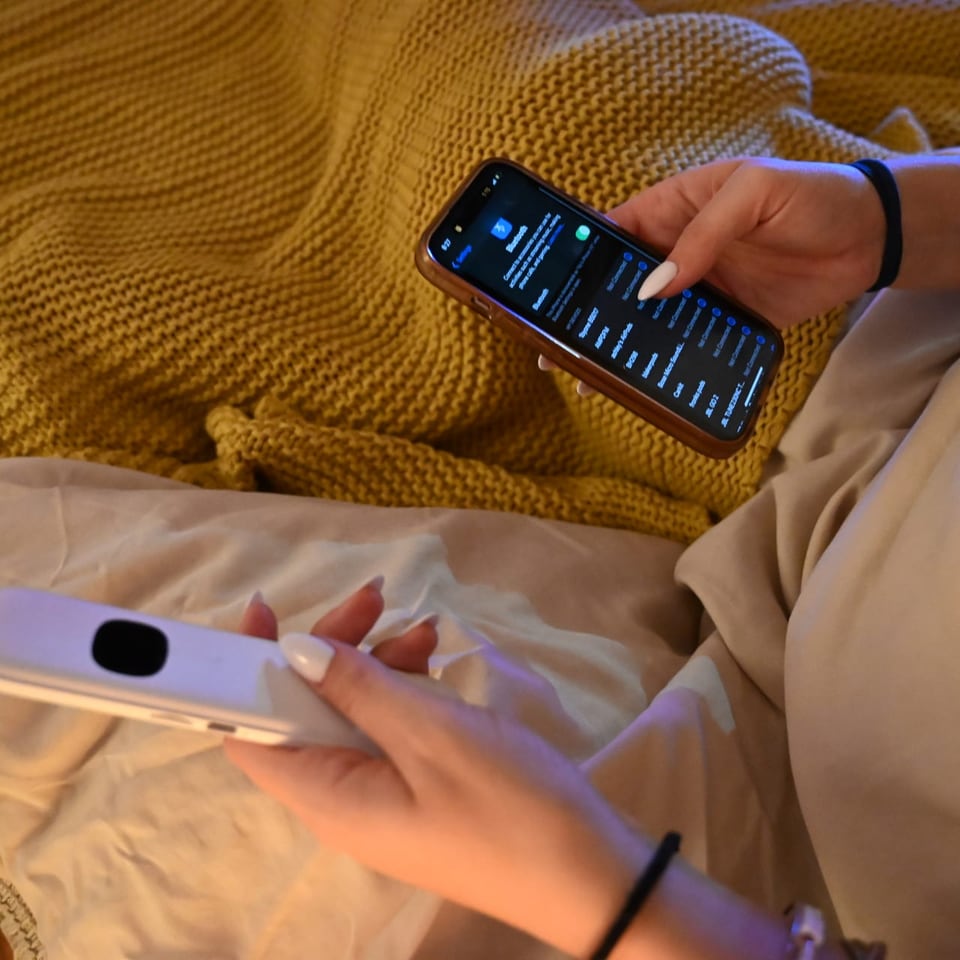
Connect
Pair via Bluetooth in 10 seconds
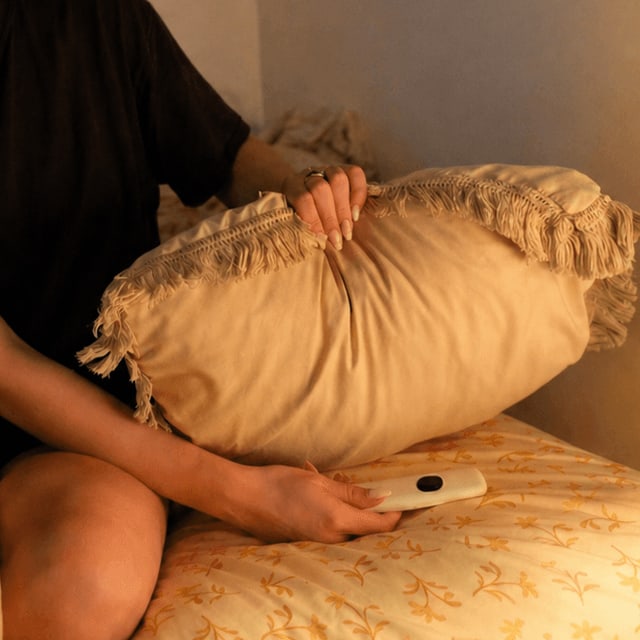
Place
Slip Lullabar under your pillow
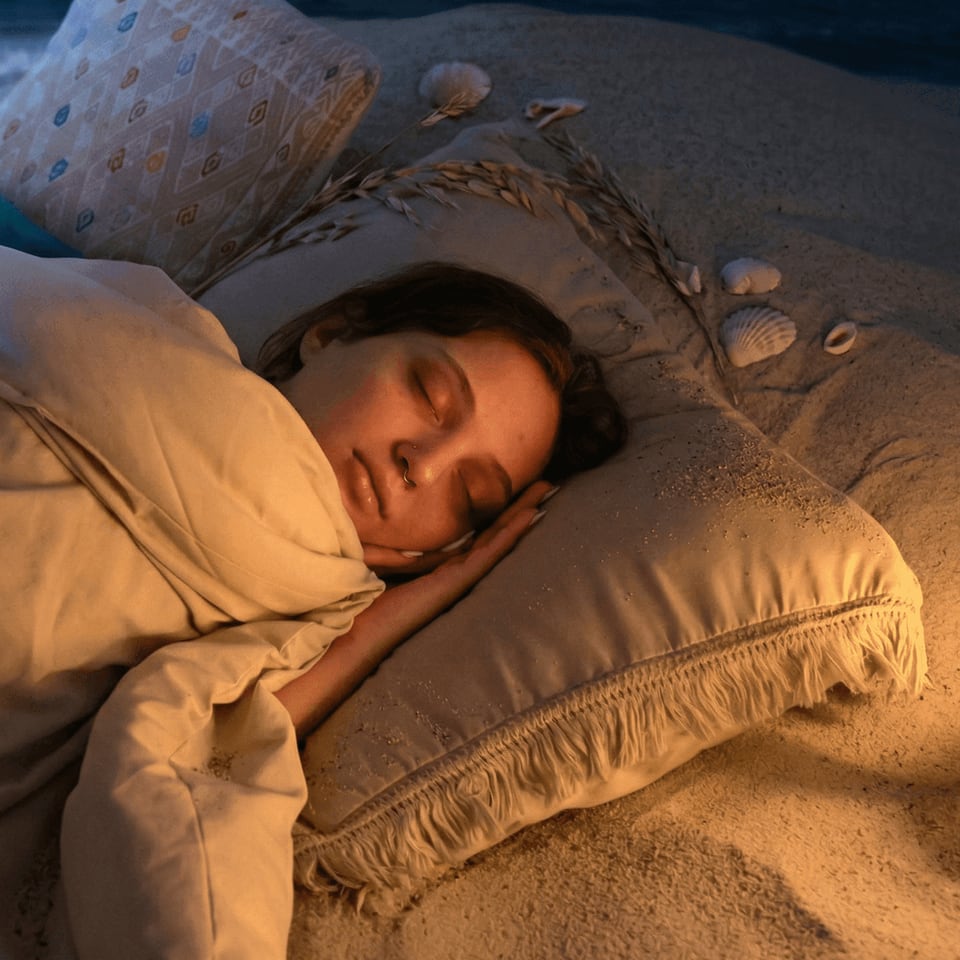
Sleep
Set a timer & drift off


Before You Try It
What people ask before they order.
Still have questions?
Thickness
Thinner than a AA battery
Weight
Lighter than an egg
Battery life
Multiple nights with timer
Bluetooth
Pairs with any phone or tablet
Length
Compact bar shape
Water resistance
Sweat & light spills
Charging
~2 hours to full
Built-in sounds
Rain, noise, nature & more
Try It for 30 Nights
Give it a night or two to find your spot. Your own bed is the only real test.
- Sleep on it for 30 nights, in your own bed.
- Not for you? One email starts your return.
- Once your return arrives, we refund the full price within 14 business days. You cover return shipping.
Every support email is read and answered by the people behind Slumbabe, usually within one business day.
10% off your first order
Your code arrives by email, with sleep tips now and then.
No spam. Unsubscribe anytime.