
For side sleepers
Your Ear Is AlreadyAgainst the Speaker
Lullabar is 11mm thin and sits under your pillow. Lie on your side and the ear resting on the pillow is the ear that hears it. Nothing goes in, on, or around your ears.
Try It Tonight$70 · 30-Night Trial · Free Shipping
You Have Already Tried the Others
Every fix for sleeping with audio has the same flaw: it puts something between your ear and the pillow. Then you turn over.
Earbuds
Lying on your side presses the bud deeper into your ear canal. The ache builds inside the first hour, and it is still there in the morning.
Sleep headbands
Elastic holds them against a head that turns all night. They shift, they bunch behind your ear, and they get warm.
A phone on the mattress
It plays into the room instead of into your ear, it runs warm under a pillow, and whatever arrives at 3am arrives out loud.
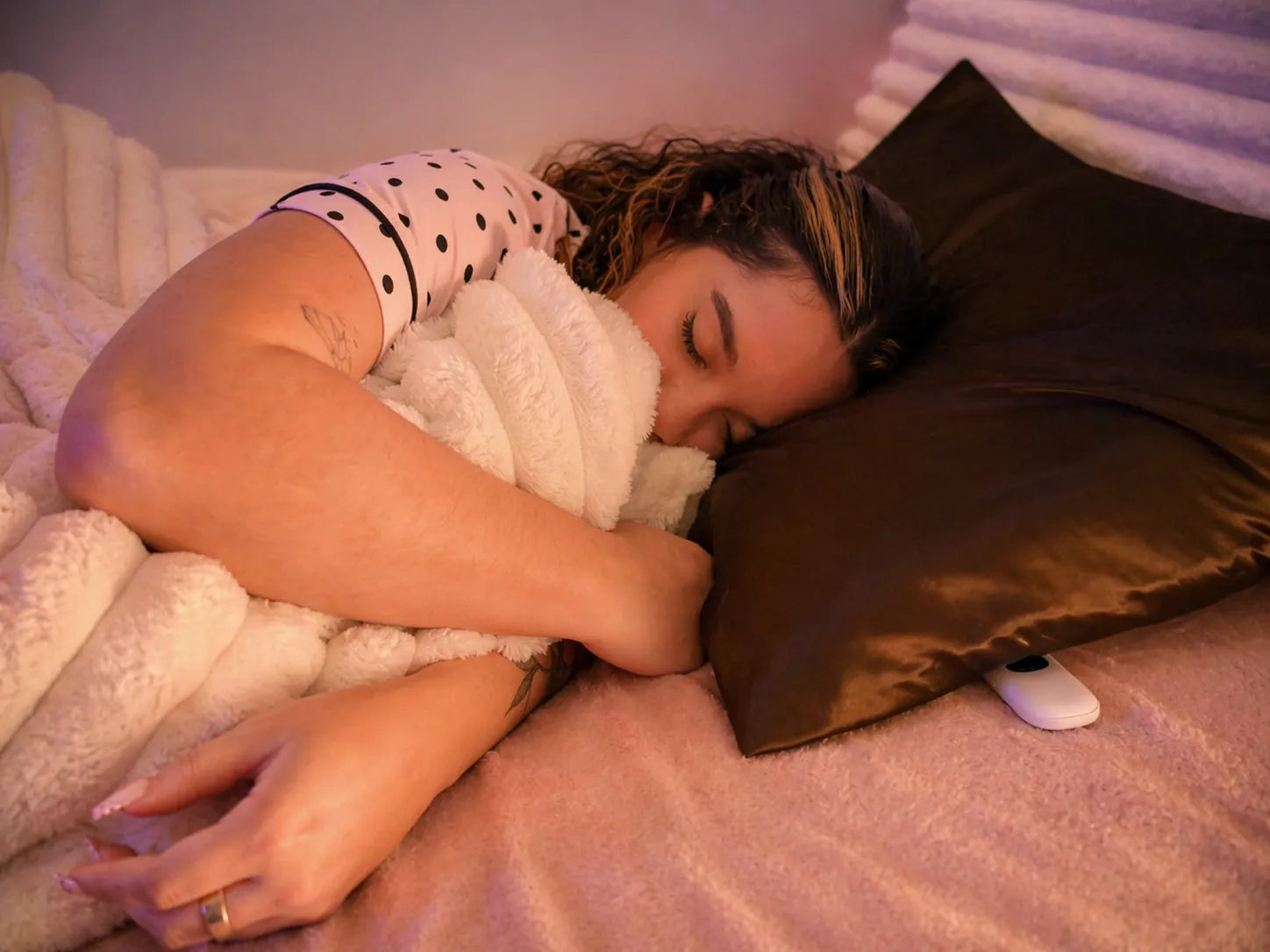

Eleven Millimetres, Under the Pillow
Slide Lullabar under your pillow. Sound travels through the fill to the ear resting on it, which is why lying on your side makes it clearer rather than quieter.
- Profile
- 11mm
- Weight
- 47.5g
- Per charge
- 10+ hours
Every support email is read and answered by the people behind Slumbabe, usually within one business day. Our story
Where It Falls Short
Worth knowing before you order, because 30 nights only means something if you know what you are testing.
- On a very thin pillow you may notice the edge for the first few nights. Most people stop; some never do.
- Very thick memory foam muffles it. Standard down, polyester and down-alternative fill carry sound best.
- It softens snoring rather than removing it. A loud snorer still comes through.
- It is a speaker, not a medical device. It will not treat insomnia and does not claim to.
What people notice first
Works perfect, plenty of sound through the pillow. would purchase again.
No complaints so far. It works well, feels comfortable, and has helped me sleep better
$70 · 30-Night Trial · Free Shipping
Common Questions
How the 30 nights work
Your own bed is the only real test.
- Sleep on it for 30 nights, in your own bed.
- Not for you? One email starts your return.
- Once your return arrives, we refund the full price within 14 business days. You cover return shipping.
$70 · 30-Night Trial · Free Shipping