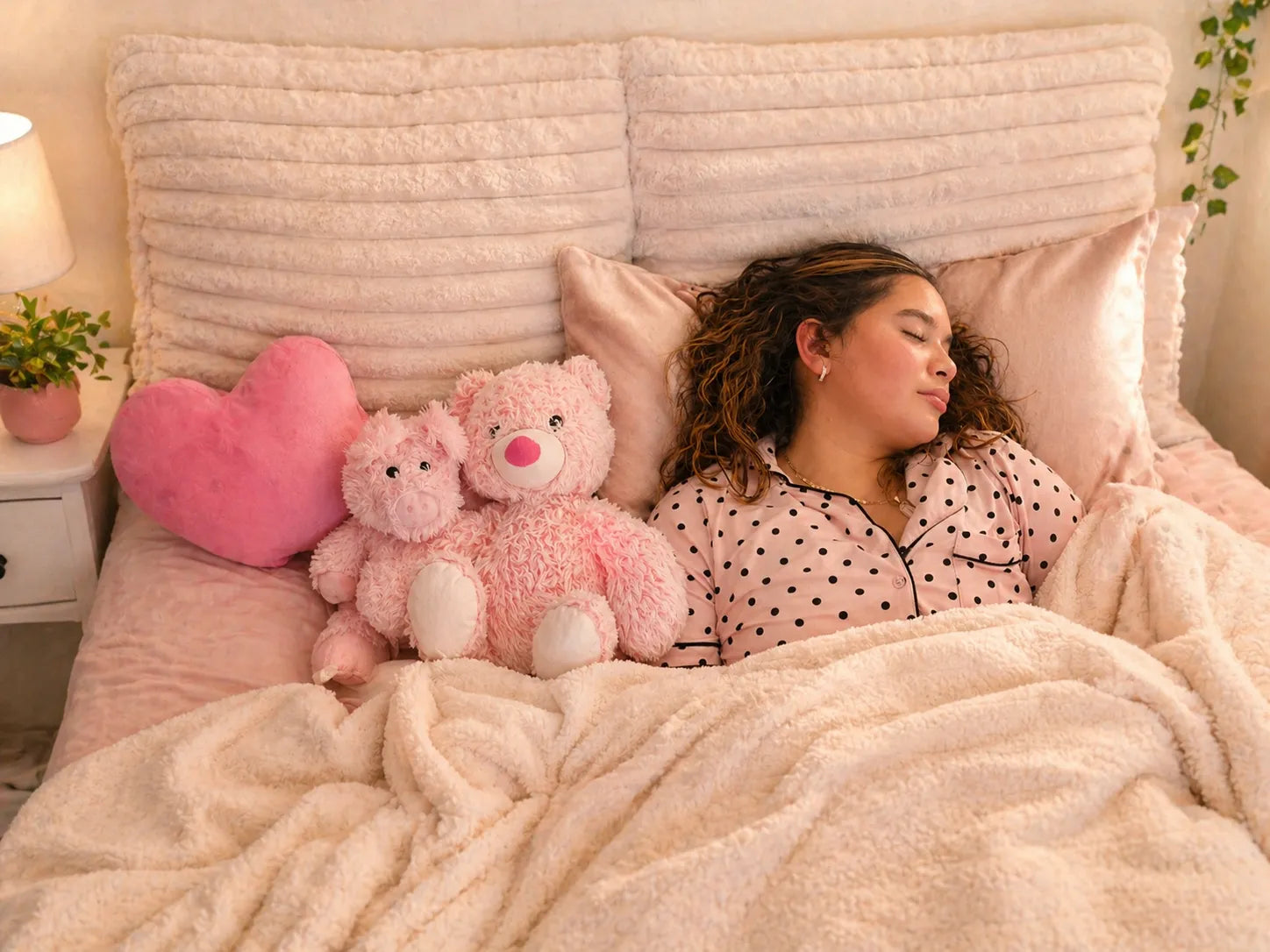
A familiar playlist, the lights off, and you are gone before the third song. Then at 3 AM you are awake with the chorus looping in your head and no way to switch it off. Falling asleep to music is not bad for you, and for many people it helps. But the kind of music most of us reach for has a specific downside that research has only recently pinned down, and it is not the one you would guess.
What Music Can Do for Sleep
The best summary of the evidence is a 2022 Cochrane review of music listening for adults with insomnia symptoms. It found that music may improve how well people feel they slept. The evidence that it makes you fall asleep faster, or sleep longer, was weaker and lower in certainty.
That fits most people's experience. Music helps you unwind, gives a busy mind something gentle to follow instead of tomorrow's to-do list, and becomes a routine cue that tells your body the day is over. Those are real benefits. They are not magic, and a playlist is not a cure for a genuine sleep problem.
The Earworm Problem
Here is the catch. In 2021, researchers at Baylor University published two studies in Psychological Science on music and sleep.
In the first, a survey of 199 people, those who listened to music more often reported more earworms at night, songs replaying involuntarily in their heads. Frequent nighttime earworms were linked with poor sleep quality, with people who had them regularly around six times as likely to report sleeping badly.
The second study moved into a sleep lab. Fifty people listened to popular songs before bed, including "Shake It Off" and "Don't Stop Believin'", while their sleep was measured overnight. Some heard the normal versions. Others heard instrumental versions with the vocals removed.
The instrumental group had roughly twice as many earworms and measurably worse sleep. And people reported the earworms during night awakenings, which suggests the sleeping brain keeps rehearsing melodies it heard before bed.
That flips the usual advice. "Just play instrumentals" is not the fix. The problem is a catchy, repeating melody, whether or not someone is singing it.
Music That Helps, Music That Hurts
- Avoid hooks. Songs built around a chorus you can hum are exactly what the brain loves to replay. Skip anything you would sing along to in the car.
- Choose music without a strong tune. Ambient, drone, soft piano with little melody, slow classical movements. Music that sets a mood without handing your brain something to repeat.
- Keep it steady. Sudden loud passages, drum drops, and big key changes pull you back toward waking. Even and gentle beats dramatic and beautiful.
- Watch the shuffle. A calm playlist that jumps into something upbeat at track nine undoes the previous eight.
- Separate your playlists. Do not fall asleep to the songs you run or work to. You want sleep music that means sleep, not music that means effort.
- If earworms already wake you, try swapping music for steady, melody-free sound like rain for a few weeks and see if the 3 AM loops stop: why rain sounds help you sleep.
Set It Up So It Stays Quiet
- Set a timer. Thirty to sixty minutes covers falling asleep. Music playing for hours after you drift off gives your brain more melody to hold onto and nothing in return.
- Beware free streaming tiers. Ads land between tracks, often louder than the music. A playlist you downloaded, or a paid tier, avoids the midnight jingle.
- Turn on volume levelling. Most streaming apps have a setting to even out loudness between songs. Switch it on for your sleep playlist.
- Silence your phone. A notification chime over quiet music is a guaranteed wake-up.
- Keep it low. Just loud enough to follow. Quieter music is easier to drift away from.
- Think about delivery. Earbuds hurt side sleepers and bring their own risks over a full night: is it bad to sleep with earbuds in? A speaker on the nightstand fills the room for whoever is next to you.
Music, Voices, or Steady Sound?
Music is a good fit if you want mood and routine, and you do not get songs stuck in your head. If your thoughts race in words, a calm voice often works better: falling asleep to podcasts. If outside noise is what wakes you, steady sound masks it better than music does, because music rises and falls: brown noise vs white noise vs pink noise.
Plenty of people combine them: a few calm tracks to unwind, then rain or noise for the rest of the night.
How Lullabar Fits
The Lullabar is a pillow speaker. It slides under your pillowcase, and the sound travels through the pillow fill to the ear resting on it.
- Stream your sleep playlist. Bluetooth 5.4 pairs once and reconnects every night.
- Sleep timer on the device. 30, 60, or 120 minutes, so the music stops even if your app keeps going.
- micro-SD for offline albums. No ads between tracks, no notifications, no phone in the bed.
- 11 nature sounds built in. Handy for switching from music to rain when earworms are a problem.
- At sleep volume, your partner hears nothing. Only your pillow carries it, so your playlist stays yours.
- Nothing in your ears. Comfortable on your side, all night. 10+ hours of battery, 11mm thick, 47.5 g.
One honest limit: this is a single speaker under one ear, not a pair of stereo headphones. Music sounds warm and clear at low volume, which is what you want at bedtime, but you will not get the wide stereo image of a good headset. For falling asleep, that trade is usually worth it.
How sound through a pillow works: what pillow conduction audio actually is.
Common Questions
"Is it bad to fall asleep to music every night?"
Not for most people. A 2022 Cochrane review found music may improve how well people feel they slept. The main things to watch are catchy songs that turn into nighttime earworms, music left playing all night, and delivery that is uncomfortable or disturbs a partner.
"Why do I get songs stuck in my head at night?"
Research from Baylor University found that people who listen to more music report more nighttime earworms, and that catchy melodies heard before bed can replay during night awakenings. In their lab study, instrumental versions of popular songs caused about twice as many earworms as the versions with lyrics.
"What kind of music is best for sleep?"
Music without a strong, catchy melody: ambient, drone, soft piano, or slow classical movements. Keep it steady, avoid sudden loud passages, and do not use songs you would sing along to. Play it quietly on a timer.
"Should I use a sleep timer for music?"
Yes. Thirty to sixty minutes covers falling asleep for most people. Letting music play all night gives your brain more melody to hold onto without any extra benefit, and it adds more chances for an ad or a loud track to wake you.
"Is instrumental music better for sleep than songs with lyrics?"
Not automatically. In the Baylor lab study, instrumental versions of catchy pop songs produced more earworms and worse sleep than the lyrical versions. What matters more is whether the music has a memorable, repeating tune. Gentle music without a hook is the safer choice.
The Bottom Line
Falling asleep to music is fine, and often helpful. Just choose it like a sleep tool rather than a playlist you enjoy: no hooks, no big changes, low volume, and a timer.
If you keep waking with a chorus on repeat, that is your cue to swap melody for steady sound, at least for the last part of the night.
Try the Lullabar for 30 nights and keep your sleep playlist between you and your pillow.